Showing posts with label kettle. Show all posts

Tuesday, 19 May 2015

Banish that Bad Taste in your Kettle


Recently, there's been lots of talk in the media about a bad taste in your cuppa from certain kettles. Here's our advice to find out if it's the water or the kettle, and if anything can be done about it.


1. Try boiling the water in a pan to see how it tastes. If you can determine that the taste has come from the kettle - and it's a new kettle - then boil it four or five times to see if the peculiar taste goes away. There may be manufacturing chemicals present. If it doesn't, then pour in half a box of Bicarbonate of Soda and leave to treat for an hour. Then add water, boil it and pour away. Boil it once more using just water and then discard. If the taste still lingers then it’s time to return it to the retailer!


2. If it tastes bad from the pan AND the kettle, then buy some bottled water and try that. If the taste IS from the tap water, then contact your water company and they will investigate. Ask the neighbours if they've noticed a change as well.


3. If it's an existing kettle and the water tastes fine with pan boiled water, it may be time for a clean and descale. If so, follow these tips: http://www.dri-pak.co.uk/kitchen-cleaning-tips/kettles.html#.VVsVpvAeriE

Friday, 6 July 2012

It's Tea Time!

As all good Brits know, almost everything can be solved with a good cup of tea. From the first brew made in China over 5,000 years ago, people all over the world have relaxed, laughed, cried and put the world to rights over a brew. It’s really no surprise that tea is Britain’s most popular beverage.

But what if your kettle is encrusted with limescale that ends up floating to the top of your well-earned cuppa? There is a simple, quick, effective and natural way to get rid of that gunk and make sure your kettle makes great tea again, check out our video below…


Regularly descaling appliances like kettles helps them to be more energy efficient and means that they are less likely to break down. 

Click the pic to find out how to buy this AMAZING teapot!


So now the kettle is shiny and clean, it's time to address that dodgy looking brown film in the teapot. Tannin stains are notoriously difficult to remove, but by leaving a regular Soda Crystals solution to soak in the pot overnight and wiping the next day will make it much easier to remove.

So what are you waiting for - put the kettle on!

Thursday, 12 April 2012

Win the War against Limescale!


There’s nothing like putting your feet up at the end of a long day with a lovely cup of… limescale?!

If you live in a hard water area you’ll know what a pain limescale can be. Not only does it ruin your tea, it leaves water marks everywhere, stops your shampoo from lathering properly, reduces the efficiency of appliances and can even contribute to them breaking down.

Luckily we’re here to arm you with clever tips and tricks to defeat that gunk!

Know your enemy


Here comes the science bit, concentrate!

Limescale is essentially alkaline mineral - calcium bicarbonate - suspended in water. It’s actually very good for us to drink this water because of the rich minerals in it, but it can play havoc with appliances that heat water like your washing machine, kettle, dishwasher, iron etc.

A lovely lump of limescale!

This is because the minerals are attracted to heating elements. When the soluble calcium bicarbonate minerals are heated they become calcium carbonate – a poorly soluble substance that therefore ‘sticks’ to the element. As more and more limescale builds up on the heating element, it requires more and more energy to heat the water and may eventually lead to the appliance breaking down.

So now you know what it is, how can you stop it ruining your stuff?


Prevention is better than cure


Water softeners use sodium to replace the calcium in the water - the same principle applies when we advise using Soda Crystals in each wash. Soda Crystals are also known as sodium carbonate, and work to soften the water in your washing machine, making laundry detergents work better and preventing limescale from sticking to heating elements. Soda Crystals also help to remove stains on clothing, as well as detergent build up in the machine. Use between 25g-50g in each wash and you will also find that you don’t need to use as much detergent too – pretty cool huh!

Different areas of the country have harder water and so require the full 50g, whereas areas with softer water won’t necessarily need as much. This map highlights the areas of hard water in England and Wales.


Fight fire with fire!


Because limescale is alkaline, acidic cleaners like White Vinegar and Citric Acid work best at removing it. Below are a few methods for removing limescale from surfaces and appliances.

Dishwashers
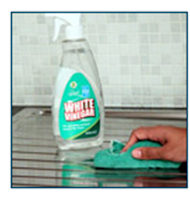
Draining Boards
Coffee Machines

Kettles

Shower Screens
Irons

So don't let limescale ruin your next cuppa - fight it head on with your army of traditional and natural products!

Bookmark and Share